


-
-
 Sold out


-
-
-
 Sold out
 Sold out
 Sold out
-
-
 Sold out
-
-
-
-


- Sold out
-
-
-

-
 Sold out


Fly Tying Tools for Precision and Comfortable Bench Work
Good fly tying tools make everyday tying tasks easier to control. From managing thread tension and trimming feathers to forming a finishing knot, each tool has a particular purpose. Building a useful collection begins with the essentials and expands as you learn new tying techniques.
The selection includes bobbin holders, scissors, whip finishers, hackle pliers, bodkins, dubbing tools, hair stackers and accessories for working with CDC feathers and other materials.
Bobbin Holders and Thread Control
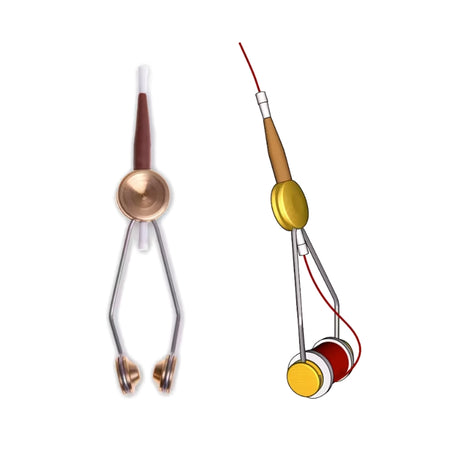
A bobbin holder supports your tying thread spool and allows you to guide the thread around the hook. A smooth thread path and appropriate tension are important for accurate work.
Different designs use metal tubes or ceramic inserts. Compare their construction and compatibility with your spools rather than assuming one design suits every thread.
Bobbin threaders provide a convenient way to pass fine tying thread through the holder.
Fly Tying Scissors for Detailed Cutting
Fine-point tying scissors are particularly useful when trimming delicate fibres close to the hook. Other scissors may be better suited to thicker or bulkier materials.
Comfortable handling and a controlled cut matter more than owning many different pairs. Protect fine blades from hard materials that are unsuitable for the scissors.
Whip Finishers and Bodkins
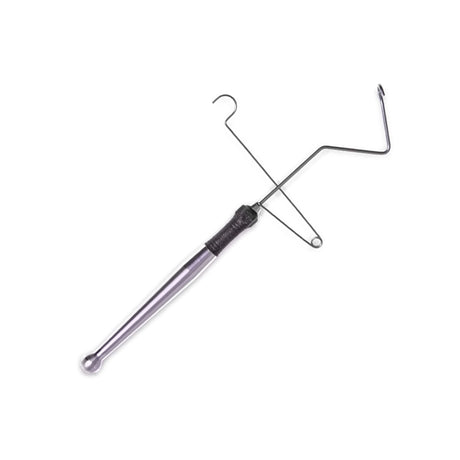
A whip finisher helps form a finishing knot at the head of a fly. Different shapes and sizes offer slightly different handling characteristics.
A bodkin is a versatile pointed tool for arranging fibres, teasing out dubbing and working on small areas of a pattern. It is useful for a variety of detailed tying tasks.
Hackle Pliers and CDC Tools
Hackle pliers grip a feather while it is wrapped around the hook. Their holding pressure and shape are important, particularly when working with delicate hackles.
The range includes standard and rotating pliers, hackle guards and specialised tools for preparing or positioning CDC fibres.
Dubbing Twisters, Hair Stackers and Brushes
Dubbing twisters are used for selected dubbing-loop techniques. Combs and brushes can help separate or shape fibres after they have been tied in.
A hair stacker aligns the tips of a bundle of natural hair, which is useful for certain wings and tails. These more specialised tools become worthwhile when you regularly use the techniques they support.
Choosing an Essential Fly Tying Tool Set
Beginners can start with a bobbin holder, tying scissors, a whip finisher, hackle pliers and a bodkin. Add specialised tools only when they will improve a technique you are practising.
If you want several basic tools together, explore the fly tying kits and tool sets. Remember that a tool set may not include a vise, while a vise-and-tools kit combines different components.
Frequently Asked Questions About Fly Tying Tools
What are the most important fly tying tools for beginners?
A bobbin holder, scissors, whip finisher, hackle pliers and bodkin provide a practical starting point for basic tying techniques.
What is the difference between a bobbin holder and a whip finisher?
A bobbin holder controls the tying thread during construction, while a whip finisher helps create the final knot.
Do I need a dubbing twister for every fly?
No. A dubbing twister is useful for particular loop techniques, but many flies can be tied without one.